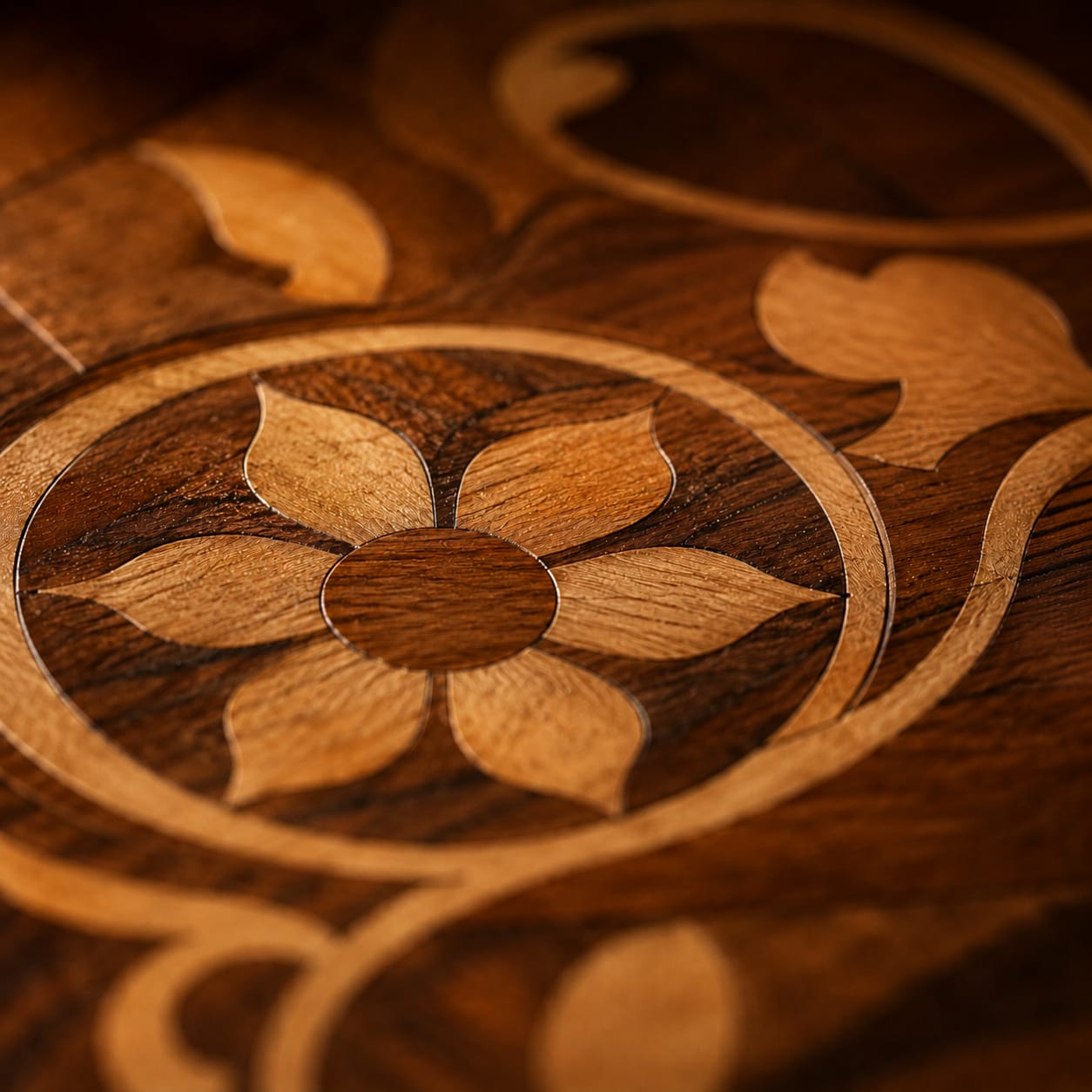
- Veneer pictures
- Parquet patterns
- Wood, metal, mother-of-pearl
- One-of-a-kind pieces
Handcrafted marquetry & mosaic from Fischer's workshop in Samplecity. Since 1987 we build only to order — no catalogue, no serial production, no imitations. Every piece is developed in close dialogue with our clients: from the first concept meeting through material samples to the final install.
We use only solid wood from European forestry — PEFC-certified with traceable origin. Oak, walnut, cherry, ash, maple, larch and spruce form our standard repertoire. On request we work with native rarities such as chequer tree, figured walnut or smoked oak.
All surfaces are stained, oiled or waxed in several passes. We do not use solvent-based industrial lacquers. The results breathe, can be repaired, develop a beautiful patina — and last decades. Every delivery includes a care leaflet and a starter set of care oil.
Installation is handled by our own team. No subcontractors, no third-party transport services for complex fit-outs. Our installers know every piece they mount, because it was born in our workshop.
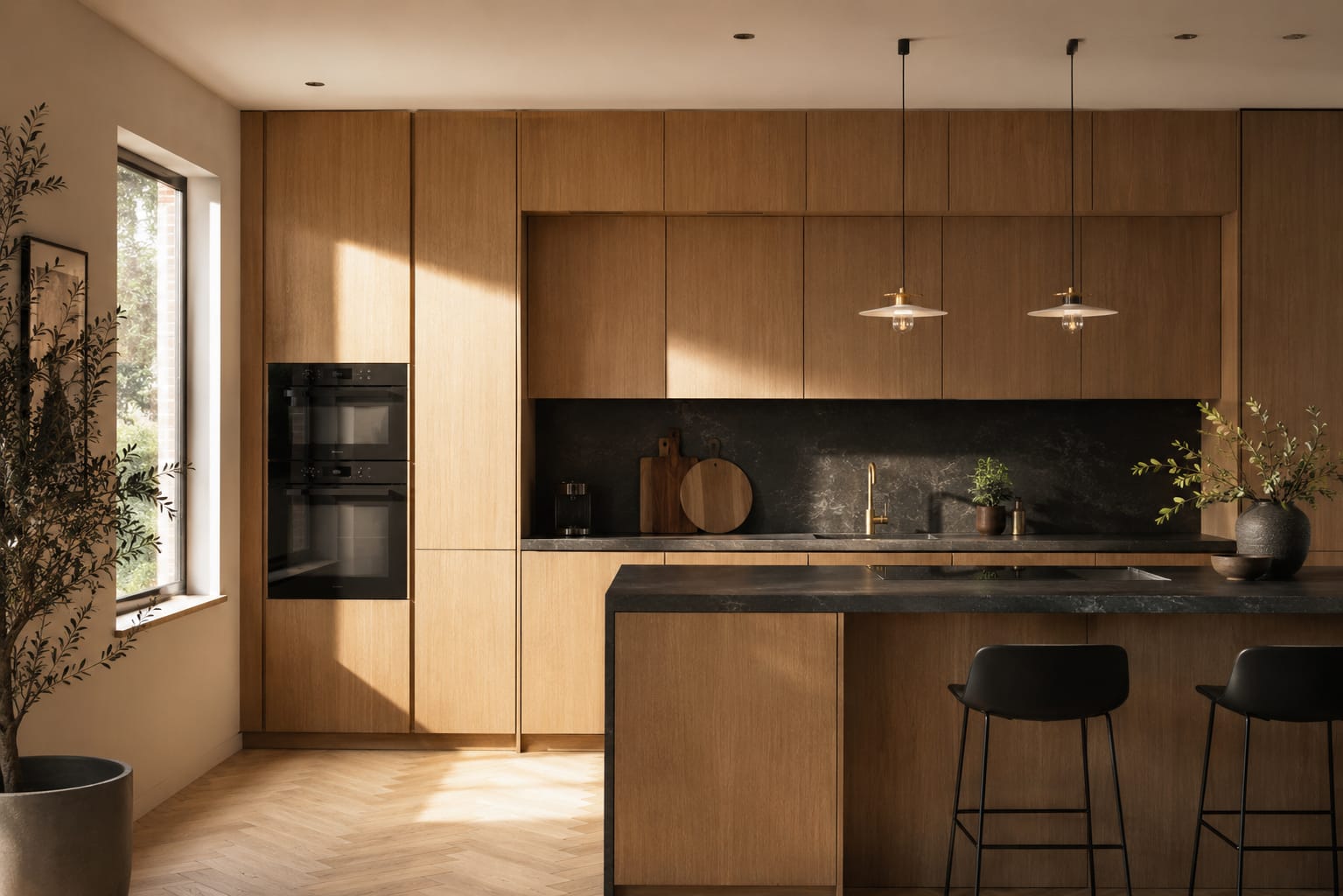
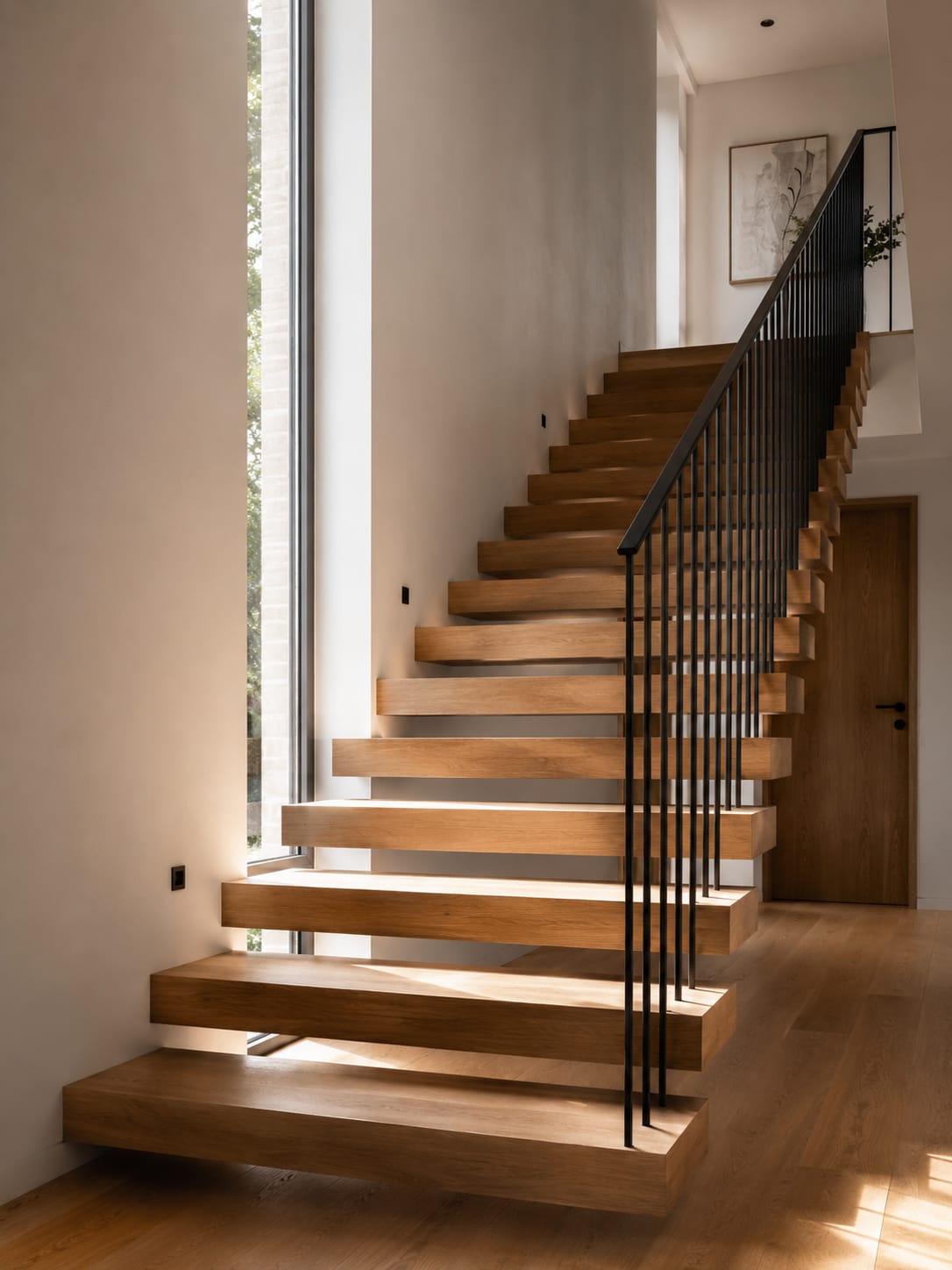
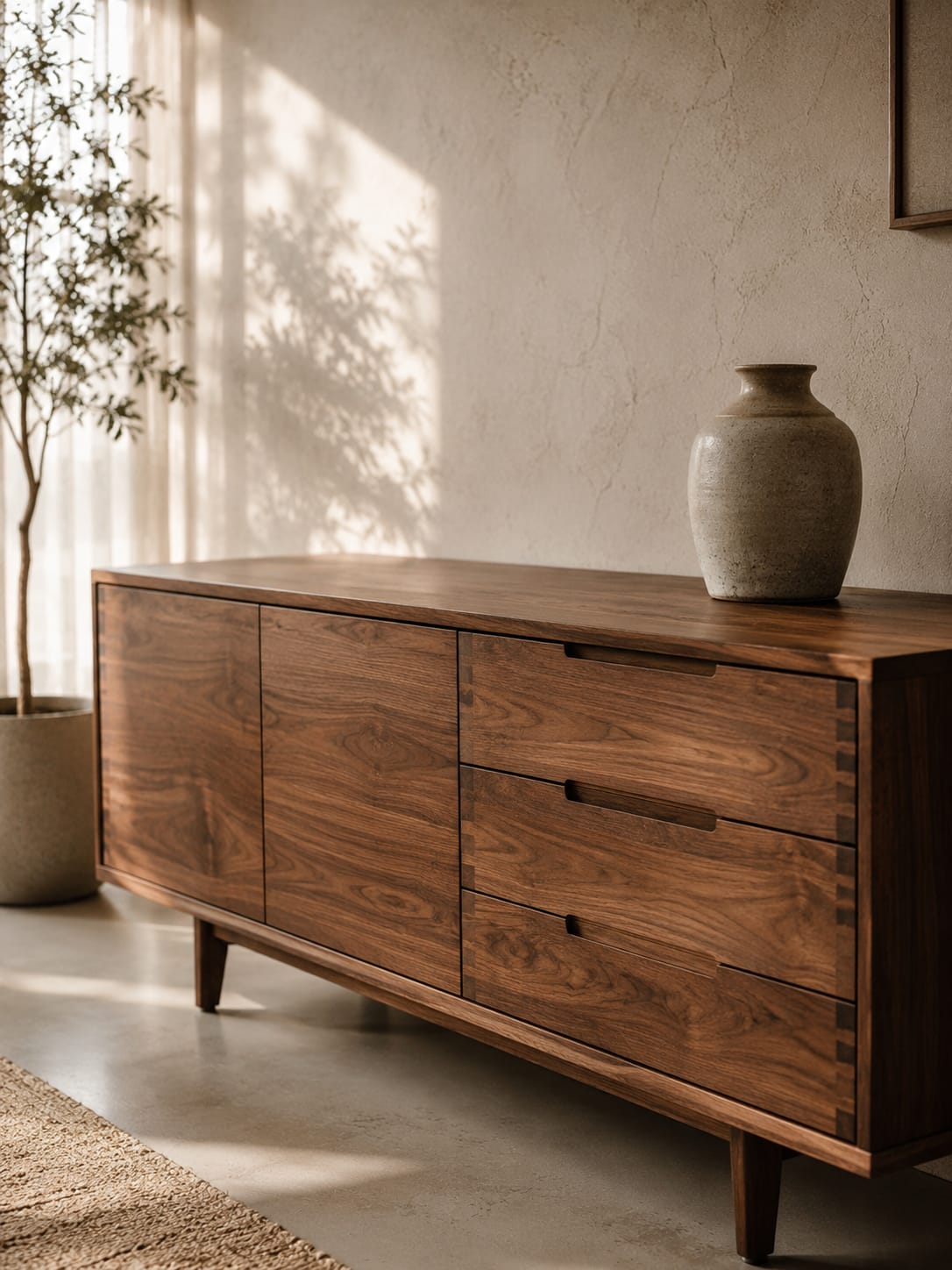


Frequently asked about Marquetry & Mosaic
Answers to the questions we hear most often — pricing, materials, process. If something is missing, just call.
A small marquetry inlay — a flower motif on a tabletop, a coat of arms — starts at around 600 euros. Larger veneer pictures, abstract compositions or full table surfaces with intarsia from various woods and mother-of-pearl run between 2,800 and 12,000 euros. Museum-grade work, like a chess table with 64 hand-cut squares of contrasting woods, can reach 20,000 euros. Each piece is a one-off.
In a marquetry we typically use 6–12 different wood types — oak, walnut, satinwood, ebony, bird's-eye maple, mahogany — and combine them with mother-of-pearl, brass, copper or pewter inlays. The combination depends on the design and the piece it sits in. We bring sample chips so you can see colour and grain before deciding.
A small inlay panel is finished in 2–3 weeks, larger compositions need 6–10 weeks. Each veneer must be cut individually with a fine fret-saw, glued with hide glue, sanded and shellac-polished. It is slow work — but you can see the difference between hand-cut marquetry and CNC-cut imitation in the joins, immediately.
